
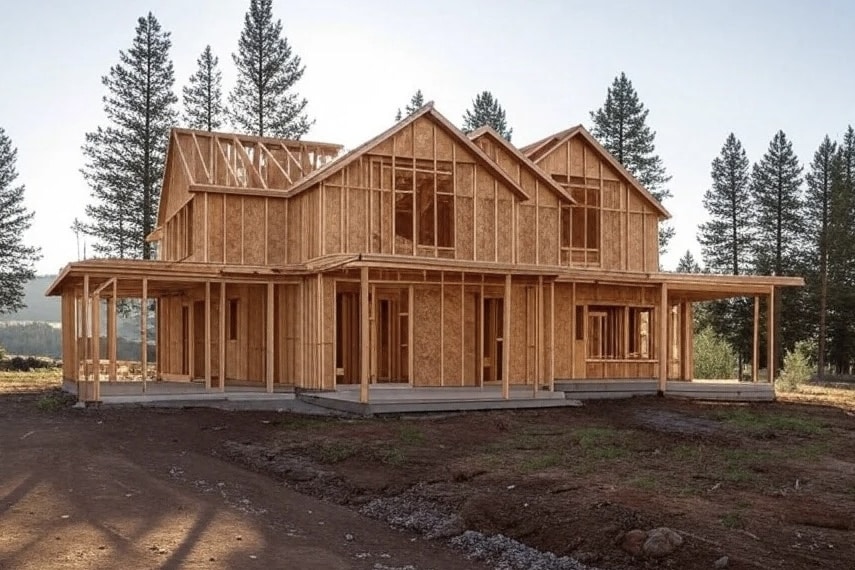
What to Know About Construction Loans in Idaho
If you’re a spec developer in Boise, Meridian, or Coeur d’Alene, you already know the financing game here is different. Lots move fast, permit timelines vary by jurisdiction, and traditional banks still process loan applications like it’s 2005, asking for 90 days and rigid monthly draws, while the lot you want sells to someone who had a lender ready.
Construction loans are short-term financing tools that fund a new home build in phases rather than all at once. They’re how you finance ground-up construction without tying up your own capital from start to finish. Whether you’re building a spec property or your own home, knowing how to secure a loan and choose the right lender determines how fast you build, how much money you keep, and whether your dream becomes a reality.
How Idaho Construction Loans Fund Your Build
A construction loan provides the capital to take a spec home from dirt to done. Unlike permanent financing, these short-term loans release capital through draws as you hit milestones. Your lender verifies progress through inspections, then releases the next round so you can pay your subs and keep moving.
During the construction period, you pay interest only on the capital actually disbursed. This keeps your carrying costs lower while you’re managing multiple specs at once. Most construction loans run 12 to 18 months. When the new home is ready for sale, you either sell and pay off the loan or convert to a permanent mortgage. The as-completed value of the property determines what financing you qualify for at that stage.
Experienced operators treat draw schedules as a cash flow strategy, not just a funding mechanism.
The Four-Phase Loan Structure
Most construction loans release capital in four major phases tied to verifiable milestones:
- Foundation pour, and cure triggers 25% of the loan.
- Framing and dried-in stage releases 35%.
- Mechanical rough-in (plumbing, electrical, HVAC) unlocks another 25%.
- Final inspection and certificate of occupancy releases the remaining 15%.
These percentages reflect actual construction costs in residential buildings. Foundation work consumes significant capital upfront. Framing is your largest single expense phase. The final holdback protects both you and the lender until the punch list is completed.
Inspection Windows That Don’t Kill Your Schedule
Traditional banks often need 5-7 days to schedule an inspector, review the photos, and release capital. That’s a week of your framing crew sitting idle. Builder-focused lenders operate differently, with 24-48 hour inspection turnarounds standard for anyone who has established a track record.
A Coeur d’Alene operator working with a builder-focused lender can upload time-stamped milestone photos the same day they’re done. The inspector reviews within 24 hours, and the disbursement hits the account the next business day. Subcontractors get paid on time, and the schedule holds.
Managing Cash Flow Across Multiple Specs
When financing more than one spec at a time, draw timing becomes critical. Operators who scale successfully stagger their new home starts so that draw requests from different properties arrive in predictable intervals.
Before starting your next project, calculate your working capital needs between draws. Most construction loans require you to carry 10-15% of the loan amount in liquid reserves to bridge timing gaps. This reserve is not covered by the loan itself. It comes from your own reserves or an existing credit line. It’s what keeps you from making hard choices when one phase runs long.
Why the Local Market Creates Unique Financing Challenges
Population pressure, weather patterns, and rural land complexity create a financing environment that generic construction loans aren’t built for. Understanding these regional dynamics helps you structure the right financing from the start.
- Growth Is Compressing the Lot Purchase Window: Boise Metro added nearly 20,000 new residents from 2022 to 2025, with Meridian and Nampa are not far behind. This growth has created intense competition for finished lots. Operators who can secure a loan and close in 15 days win those contracts. We’ve seen developers lose prime land to competitors simply because their bank needed 90 days to approve credit. The lot purchase window in the fastest-growing markets has shrunk to days, not weeks. Your lender needs to move at the same speed you do.
- Seasonal Construction Windows: Northern areas limit your build season in ways that southern operators don’t always account for. Coeur d’Alene and Sandpoint regularly see conditions that shut down concrete pours and site work from November through March. Materials suppliers and subcontractor labor don’t pause while you wait on a draw. Flexible draw requests tied to actual milestones give you control over your timeline. It’s one of the real benefits of working with a financing partner who understands how construction actually works in this market.
- Land Loans and Rural Development: Rural development opportunities attract operators working in unincorporated areas. These often involve land loans for raw acreage, well and septic installation, and utility extensions. That position doesn’t work when you need to finance land acquisition and development simultaneously. Land loans combined with construction financing in a single structure are one of the most practical loan options available for operators working outside major metro areas.
Draw Schedules and Timeline Expectations for Ground-Up Specs
Understanding what to expect from your first draw to your last helps you coordinate crews, manage subcontractor payments, and protect your cash flow. For a deeper look at timing and strategy, read our breakdown of how construction draw schedules protect cash flow.
The construction loan process from closing to your first draw typically runs 7-10 days. Between subsequent draws, once you’ve submitted the inspection request, 48-72 hours is standard with a construction-focused lender. Traditional banks can take 2-3 weeks. That payment delay during construction forces you to either float subcontractor labor and materials costs yourself or ask your crew to wait.
Neither option works when you’re running multiple specs. Construction loans are subject to frequent inspection reviews, and release draws more quickly. How you finance matters, but who you choose to finance with makes that difference tangible every week you’re building.
Here’s a practical framework: submit your draw request the day you reach the next milestone. Don’t wait until Friday. Don’t batch requests. The faster you initiate, the faster funds flow to your subs. One spec developer we work with treats draw requests like invoices: they are submitted immediately when the milestone is complete, tracked in a spreadsheet alongside the subcontractor payment schedule.
Make sure your plans account for the realistic timing of each phase. Foundation work can take longer than expected when weather or supply delays happen. Buffer time protects your draw schedule from gaps that threaten subcontractor relationships. A missed payment, even once, affects who shows up for your next framing crew.
What Lenders Actually Evaluate Before Approving You
Getting approved means proving you can execute. Before you apply, review what lenders require so there aren’t any mid-process surprises. Lenders evaluate four core factors: your track record, liquidity reserves, credit profile, and feasibility. Your mortgage loan officer or construction loan specialist will walk you through specific requirements, but here’s what to have ready before you contact us.
- Experience. Most lenders want to see 2-3 completed new home builds or an equivalent general contractor background. Experience matters more than your FICO score because it demonstrates you can deliver on the loan’s underlying promise: a finished, sellable property.
- Liquidity. On a $500K construction loan, expect to show $50-75K in reserves. This is separate from your down payment. Lenders need confirmation that you can handle cost overruns without stalling the build.
- Credit approval thresholds. Most construction loans require a FICO score of 680+ for credit approval. A 700+ score unlocks competitive rates and better loan options. All loans are subject to credit approval and subject to credit underwriting standards. Your mortgage loan officer will review your debt-to-income ratio to confirm you can manage payments alongside existing obligations.
- Feasibility. Your plans, budget, and exit strategy need to hold up to scrutiny. Lenders assess the as-completed value, verify your timeline is realistic, and confirm your construction costs align with market comps. A primary residence and dream home build have different feasibility criteria than a spec intended for resale.
When you apply, be clear about your exit strategy and your down payment position so your loan officer can structure terms that match your situation. That includes whether your intended exit is a permanent loan or a sale.
Strong operators with solid liquidity move through credit approval faster. Document your experience and cash position before you apply. Make sure your plans are finished before you make contact. Incomplete applications are one of the most common reasons timelines slip.
Financing Options: Traditional Banks and Builder-Focused Lenders Compared
Not every loan product fits every operator. The same dynamics that shape spec lending in Washington state apply in Idaho’s fast-growing markets. Traditional banks require 60-90 days for construction loan approvals with rigid monthly draws. Lenders like Cascara Capital who focus on spec operators close in 15 days with flexible capital tied to your actual milestones. The right choice depends on your timeline, scale, and growth plans.
When a Conventional Mortgage or Home Loan Makes Sense
If you have a long banking relationship and you’re completing one dream home at a time on a relaxed schedule, a conventional mortgage or home loan from your local branch may offer competitive rates.
- Fixed-rate options from community banks work well for a primary residence or second-home build when you’re not racing the market.
- Adjustable-rate options and fixed-rate programs from traditional lenders are worth evaluating when your financial life supports a longer credit approval process.
Traditional loan options make sense when the property qualifies easily, and you’re not managing cash flow across multiple specs.
When Builder-Focused Construction Financing Accelerates Your Growth
If you’re managing multiple concurrent specs, competing for lots in fast-moving markets, or building on land that traditional lenders flag as complex, a permanent loan structure designed for construction professionals gives you real advantages.
The one loan approach covers the lot purchase and the entire build in one set of closing documents, eliminating duplicate fees and simplifying how you finance your operation. Interest reserve structures reduce your payment obligations during the construction period. Permanent financing options built into the original loan structure mean you won’t have to scramble to refinance at payoff.
We’ve seen operators benefit most from having a dedicated loan officer who understands spec construction, not just mortgage paperwork. When a permit delay or material backorder comes up, a construction-focused lender adjusts your draw schedule without requiring you to renegotiate your entire agreement. That flexibility delivers more value than a marginally lower rate from a lender who doesn’t understand your business.
For anyone looking to guarantee consistent access to construction financing across multiple annual specs, a relationship with a lender built around how you actually operate is the most valuable thing you can secure. It’s not just about the current deal. It’s about building a long-term financing foundation.
Making Your Next Construction Loan Decision
Map your timeline backward from your target completion date. Factor in seasonal constraints, current permitting timelines in your jurisdiction, and realistic construction schedules. Now add your lender’s closing timeline. Does everything still work? If a 60-day credit approval pushes your framing into November, you have a problem.
Your financing should accelerate your business and grow its value, not constrain it. The operators scaling successfully in Boise, Meridian, Coeur d’Alene, and the surrounding area have figured out that the right construction lender matters as much as the right framing crew.
Both directly affect your ability to finance more dream home projects faster and more profitably. When you’re ready to discuss your next spec, connect with a loan officer who understands how you build and can help you apply for a construction loan.